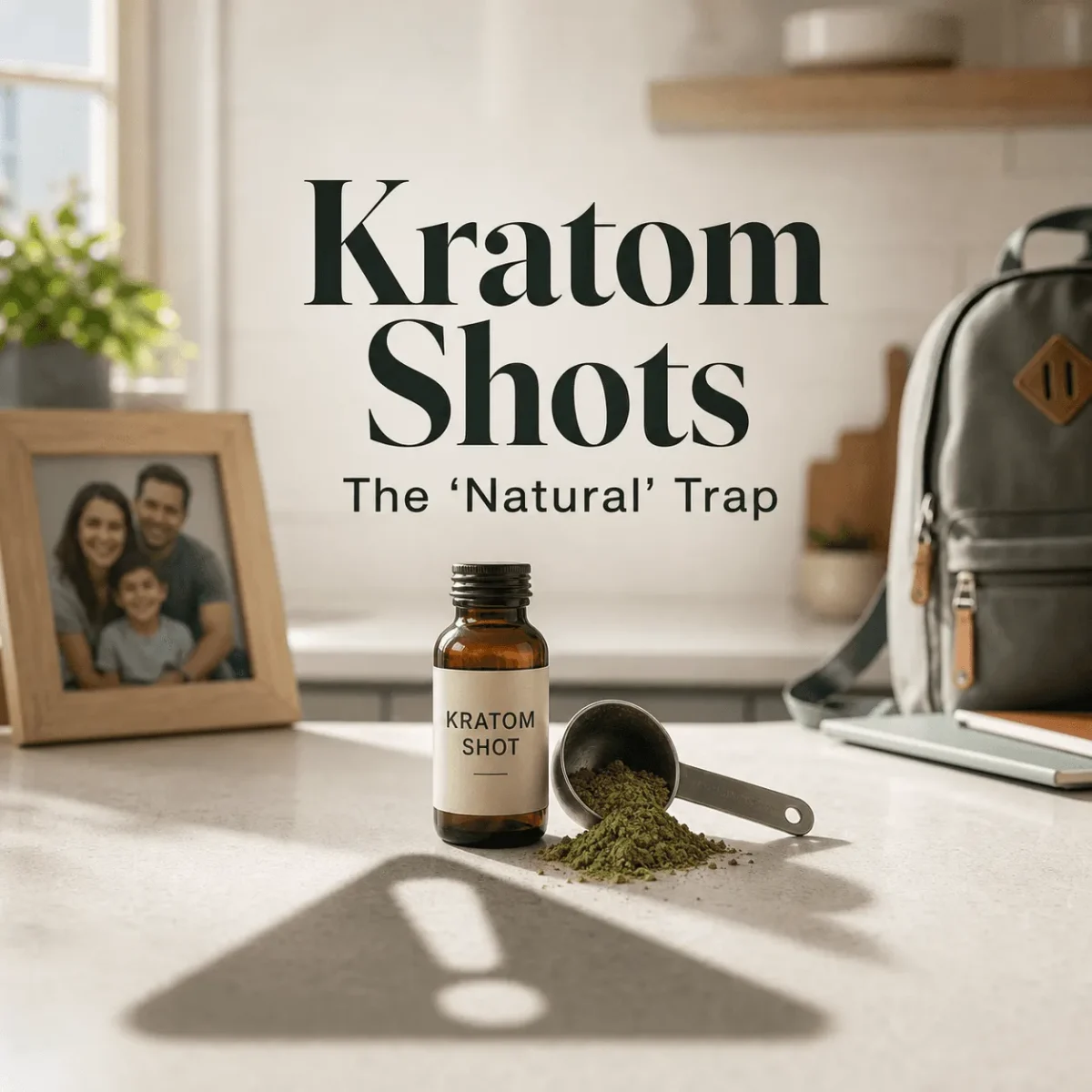
Kratom Withdrawal Symptoms: A Breakdown
Kratom sits in a weird space.
A lot of people don’t see it as a “real” drug. It’s sold in smoke shops. Online. Sometimes right next to vitamins and energy drinks. And plenty of people start it for reasons that sound reasonable. Pain. Anxiety. Coming off opioids. Just trying to get through the day without feeling awful.
Then tolerance creeps in. Dose goes up. Frequency goes up. And eventually, if they try to stop, they hit something they weren’t expecting.
Withdrawal.
Not always dramatic. Not always dangerous in the same way alcohol or benzodiazepine withdrawal can be. But it can still be miserable, disruptive, and in some cases medically complicated, especially when kratom is mixed with other substances or when mental health symptoms flare.
This is a clinician style breakdown of what kratom withdrawal can look like, why it happens, how long it tends to last, and when it’s time to stop trying to white knuckle it alone.
First, what kratom is actually doing in the body
Kratom (Mitragyna speciosa) is a plant. But “it’s natural” doesn’t tell you anything about what it does. Its main active alkaloids, mitragynine and 7-hydroxymitragynine, interact with opioid receptors, primarily mu opioid receptors. Not identical to prescription opioids, but close enough that the brain can adapt in familiar ways. Repeated exposure can lead to tolerance and dependence. Kratom also has stimulant-like effects at lower doses for many people, and more sedating, analgesic effects at higher doses. That split matters because withdrawal can carry both opioid-like symptoms and more “wired” symptoms like anxiety and restlessness. And one more thing people underestimate. Kratom products vary wildly. Powder vs capsules vs extracts. Brand to brand. Batch to batch. Some are much stronger than the label suggests. Extracts in particular can create a faster, harsher dependence pattern.
So when someone asks, “Is kratom withdrawal real?” the answer clinically is yes. It can be. And the severity tends to track with dose, frequency, product potency, duration of use, and personal vulnerability. If you or someone you know is struggling with kratom withdrawal or any substance-related issues in New York, BriteLife Recovery offers comprehensive support including an alumni program for sustained recovery success. For those in Pennsylvania or South Carolina seeking help with substance use disorders including kratom withdrawal, BriteLife Recovery has locations in Pennsylvania and South Carolina that provide specialized treatment programs tailored to individual needs.
What kratom withdrawal typically feels like (the symptom clusters)
Kratom withdrawal often resembles a milder to moderate opioid withdrawal, but it is not always mild. I’ve seen people who can function through it, and I’ve seen people who are flat out wrecked for a week. Both can be true.
Here are the most common symptom buckets.
1) Flu like and body symptoms
These are the symptoms people usually recognize first because they feel physical and obvious.
- Muscle aches, joint pain, generalized body soreness
- Chills, hot flashes, sweating
- Gooseflesh, skin crawling sensations
- Runny nose, watery eyes
- Headaches
- Fatigue and heavy limbs
- Tremor in some cases
A lot of people describe it as “like the flu but with anxiety baked in.” That’s not a medical term, but it’s accurate.
2) GI symptoms (often underrated)
Gastrointestinal symptoms can be prominent, especially for heavier use.
- Nausea
- Abdominal cramping
- Diarrhea
- Reduced appetite
Dehydration can sneak up here. If someone is sweating, not eating, and having diarrhea, they can feel weak, dizzy, and panicky, and it becomes a feedback loop.
3) Sleep disruption (the big driver of relapse)
If I had to pick one thing that makes people go back to kratom, it’s insomnia.
- Difficulty falling asleep
- Waking frequently
- Restless sleep with vivid dreams
- Restless legs or “can’t get comfortable” sensations
Even when other symptoms start easing, sleep can lag behind. That’s where people often say, “I can’t do my job like this,” and they take “just a little” to knock themselves out. And then the cycle resets.
If you or someone you know is struggling with kratom withdrawal in New Jersey, it may be beneficial to seek professional help. BriteLife offers resources and support for those dealing with substance misuse and withdrawal symptoms.
4) Mood and mental health symptoms
This is where kratom withdrawal can hit hard, particularly for people who were using it to self treat anxiety, depression, PTSD symptoms, or chronic stress.
- Anxiety, sometimes intense
- Irritability, agitation
- Low mood, tearfulness
- Anhedonia (nothing feels rewarding)
- Brain fog, trouble concentrating
- Feeling emotionally raw or overwhelmed
Some people report panic attacks. Others report a kind of flat, bleak depression for days.
And yes, in some cases people experience suicidal thoughts. Not everyone, not even most, but it’s not rare enough to ignore. If that’s present, treat it like the emergency it can be.
5) Cravings and compulsive thinking
Cravings during kratom withdrawal can be both physical and mental.
- “I just need it to feel normal”
- “I can’t handle another night without sleep”
- “One dose won’t matter”
- Strong cue based cravings (driving past the shop, stressful meetings, conflict, pain flares)
Craving is not a moral failure. It’s a predictable brain response when a substance has been used repeatedly for relief.
When do kratom withdrawal symptoms start?
For most people, symptoms begin within about 12 to 24 hours after the last dose. Sometimes sooner for frequent dosing or extracts. Sometimes later if someone was dosing once daily and at lower amounts.
Onset is influenced by:
- How often you dosed (multiple times daily tends to produce faster onset)
- Whether you used extracts (often shorter runway, sharper crash)
- Your metabolism and overall health
- Whether you’re taking other sedatives or opioids
How long does kratom withdrawal last? (a practical timeline)
There is no perfect chart because kratom products vary and people vary. But clinically, a rough pattern shows up pretty consistently.
Days 1 to 3: the ramp up
- Anxiety rises, restlessness increases
- GI symptoms may start
- Sleep begins to break down
- Body aches and chills often intensify
This is where people often think, “Okay, this is worse than I expected.”
Days 3 to 5: peak symptoms for many
This is commonly the toughest window.
- Strong insomnia
- Sweats, aches, GI upset
- Irritability and emotional volatility
- Cravings spike
Not everyone peaks here, but many do.
Days 5 to 10: physical symptoms ease, sleep lags
- Body symptoms begin to improve
- Energy is still low
- Sleep can remain fragmented
- Mood can still be unstable
This is also the point where people return to work or responsibilities and suddenly feel how depleted they are. That mismatch can trigger relapse.
Weeks 2 to 4+: the “after” phase (not always, but common)
Some people experience lingering symptoms often described as post acute withdrawal like symptoms.
- Low motivation
- Anxiety that comes in waves
- Mild depression
- Sleep still not normal
- Cravings triggered by stress or pain
This doesn’t mean you’re broken. It means the brain is recalibrating. Especially if kratom was used daily for months or years.
Why some people have much worse withdrawal than others
Two people can both say “I used kratom,” and their bodies may have been dealing with completely different exposures.
Severity tends to increase with:
- High daily dose (especially 20+ grams/day, though people vary)
- Frequent dosing (every few hours)
- Extracts or concentrated products
- Long duration of daily use
- Co occurring mental health conditions
- Chronic pain (not withdrawal itself, but pain returning amplifies distress)
- Polysubstance use (alcohol, benzos, opioids, stimulants)
Also, some people don’t actually know how much they’re taking. Scoops vary. Products vary. “A tablespoon” is not a dose.
Kratom withdrawal vs opioid withdrawal: are they the same?
They overlap a lot. But kratom withdrawal is often described as:
- Less vomiting than classic opioid withdrawal, but not always
- More anxiety and agitation for some
- More insomnia as a dominant complaint
- More variability person to person
Clinically, I treat it as its own thing while still respecting the opioid receptor piece. The practical takeaway is simple: it can be significant, and it deserves a real plan.
Red flags that mean you should not detox alone
Even though kratom withdrawal is not typically considered as medically dangerous as alcohol or benzodiazepine withdrawal, there are situations where going it alone is a bad idea.
Consider urgent medical support if you have:
- Chest pain, fainting, severe shortness of breath
- Severe dehydration (can’t keep fluids down, persistent diarrhea, dizziness)
- Uncontrolled vomiting
- Confusion, hallucinations, severe agitation
- Suicidal thoughts, self harm urges, or feeling unsafe
- A history of seizures
- Significant heart conditions
- Pregnancy
- Heavy use plus other substances (especially alcohol, benzos, opioids)
In such cases, seeking professional help from a drug and alcohol rehab center could be beneficial. For those located in New York, West Kill offers specialized drug and alcohol rehab. Alternatively, individuals in Pennsylvania can consider the Hanover rehab center, while those in South Carolina might find the Hilton Head Island rehab center suitable for their needs.
Also, if you’ve tried to stop multiple times and keep relapsing, that’s not “lack of willpower.” That’s dependence doing what dependence does. That’s a strong sign that a higher level of support might actually save you time, suffering, and risk.
Tapering vs cold turkey: what clinicians usually consider
People ask this constantly. And the honest answer is: it depends.
Cold turkey
Pros:
- Faster, clear endpoint
- No prolonged exposure
Cons:
- Higher symptom intensity
- Higher short term relapse risk for many
- Can be brutal if you have work, kids, medical issues
Taper
Pros:
- Symptoms may be more manageable
- You can stabilize sleep and functioning gradually
Cons:
- Requires consistency and self control, which dependence can undermine
- People often accidentally “taper up” during stress
- If using unmeasured powder, tapering is sloppy by default
If someone is using extracts, a common clinical strategy is to transition off extracts first (to a measured, consistent form) and then taper. But this should be individualized. Especially if other substances are involved.
If you are unsure, that’s where a medically supervised detox assessment helps. Not because everyone needs inpatient care. But because having a real plan, vitals monitoring, and symptom management changes the whole experience.
Symptom management: what is usually treated and why
Detox care is not about knocking someone out or swapping one addiction for another. It’s about:
- Keeping you medically safe
- Reducing suffering so you don’t abandon the process
- Stabilizing sleep, hydration, and mental health
- Preparing you for what comes after acute withdrawal
Clinically, support may include:
- Hydration and electrolytes
- Non opioid comfort medications for GI upset, muscle aches, anxiety, and sleep
- Monitoring blood pressure, pulse, temperature
- Screening for depression, suicidality, trauma symptoms
- If co occurring opioid use disorder is present, discussing evidence based medications for OUD where appropriate
One important note. A lot of people using kratom are also trying to avoid traditional opioids. They may have strong feelings about medication. That’s okay. The goal is shared decision making, not pressure. But you also want accurate information and a team that takes your symptoms seriously.
The relapse loop no one talks about: “I quit and I felt worse emotionally”
This is a common pattern:
- Someone stops kratom.
- Physical symptoms pass in a week or so.
- Mood stays low. Anxiety stays high. Sleep is still off.
- Life stress hits.
- They remember how fast kratom worked.
And they go back.
So when we talk about kratom withdrawal, we have to talk about what kratom was doing emotionally. It may have been masking anxiety or depression. It may have been numbing trauma. It may have been providing energy and confidence. When it’s gone, all of that can rush back. Sometimes stronger, because your nervous system is already sensitized from withdrawal and poor sleep.This is why treatment that includes therapy and mental health support tends to work better than “just detox.” Detox is the first step. Not the whole thing.
What treatment can look like, realistically
Some people do fine with outpatient support, a taper plan, therapy, and accountability. Others need a higher level of care, especially if the withdrawal is severe, the home environment is chaotic, or co-occurring substance use is present.
At BriteLife Recovery, the model is a continuum, which matters. People can start with a medically supervised detox when needed, then step into residential treatment or structured outpatient care depending on clinical needs, plus evidence-based therapies and family programming. That step down plan is often where people either keep improving or slip.
If you’re reading this and thinking, “This is me, I keep trying to stop and I can’t,” it might be time to stop making it a private battle. You can reach out to their admissions team, ask questions, and verify insurance even if you’re just trying to understand your options. No commitment required to have a conversation.
Incorporating nature-informed therapy into your recovery journey can also be beneficial as it addresses not just the physical dependence but also the underlying emotional issues that may have been masked by substance use.
Quick FAQ
Is kratom withdrawal dangerous?
Usually it’s more uncomfortable than dangerous, but it can become risky in certain situations: severe dehydration, significant mental health symptoms, pregnancy, heart issues, or mixing substances. If in doubt, get evaluated.
Can kratom withdrawal cause seizures?
It’s not common from kratom alone, but risk goes up with co use of other substances, underlying seizure disorders, or abrupt discontinuation of sedatives.
Why is my anxiety so intense?
Partly rebound. Partly loss of a coping tool. Partly sleep deprivation. Also, opioid receptor adaptation affects stress circuitry. Anxiety in withdrawal is real, and it can feel outsized.
How do I know if I’m dependent?
If you need kratom to feel normal, avoid feeling sick, sleep, function at work, or regulate mood. Or if you get clear withdrawal symptoms when you stop. Those are strong indicators.
Let’s wrap this up (in a very practical way)
Kratom withdrawal symptoms are real, and for some people they are more than “a little uncomfortable.”
Expect some mix of body aches, flu like symptoms, GI upset, insomnia, anxiety, irritability, low mood, and cravings. The worst of it often peaks around days 3 to 5, with sleep and mood sometimes taking longer to normalize.
If you have red flags, severe symptoms, co occurring mental health issues, or you keep relapsing, don’t keep forcing yourself through the same cycle. Talk to a medical professional who understands detox and addiction medicine. And if you want a structured path that goes beyond just getting through the first week, you can explore options through BriteLife Recovery at https://britelife.com and speak with an admissions specialist about the right level of care.
Because yes, you can get off kratom. But you deserve to do it in a way that’s safe, and sustainable, and doesn’t leave you wrecked in the process.
FAQs (Frequently Asked Questions)
What is kratom and how does it affect the body?
Kratom (Mitragyna speciosa) is a plant whose main active alkaloids, mitragynine and 7-hydroxymitragynine, interact primarily with mu opioid receptors in the brain. While not identical to prescription opioids, this interaction can lead to tolerance and dependence with repeated use. Kratom also has stimulant-like effects at lower doses and sedating, analgesic effects at higher doses.
Is kratom withdrawal real and what factors influence its severity?
Yes, kratom withdrawal is real and can range from mild to severe. The severity of withdrawal symptoms typically depends on factors such as dose, frequency of use, product potency (powder, capsules, extracts), duration of use, and individual vulnerability. Extracts especially can lead to faster and harsher dependence patterns.
What are the common physical symptoms experienced during kratom withdrawal?
Common physical symptoms of kratom withdrawal include flu-like signs such as muscle aches, joint pain, chills, hot flashes, sweating, gooseflesh sensations, runny nose, watery eyes, headaches, fatigue, heavy limbs, and sometimes tremors. Many describe it as feeling like the flu combined with anxiety.
How does kratom withdrawal affect gastrointestinal health?
Gastrointestinal symptoms during kratom withdrawal often include nausea, abdominal cramping, diarrhea, and reduced appetite. These symptoms can lead to dehydration if not managed properly due to sweating and loss of fluids through diarrhea.
Why is sleep disruption a significant challenge during kratom withdrawal?
Sleep disruption is one of the most challenging aspects of kratom withdrawal and a major driver for relapse. Symptoms include difficulty falling asleep, frequent waking, restless sleep with vivid dreams, and restless legs or discomfort that prevents getting comfortable. Sleep disturbances often persist even after other symptoms improve.
What mental health symptoms might occur during kratom withdrawal?
Mental health symptoms during kratom withdrawal can be intense and include anxiety, irritability, agitation, low mood or tearfulness, anhedonia (loss of pleasure), brain fog or trouble concentrating, emotional overwhelm, panic attacks, depression, and in some cases suicidal thoughts. These symptoms may be more pronounced in individuals who used kratom to self-treat anxiety or depression.