7-OH Kratom: Effects, Addiction, and How to Find Treatment
A product sold at the gas station counter as a "natural" wellness shot is quietly driving a new addiction crisis. It is called 7-OH, and for many people it behaves less like an herbal supplement and more like a powerful opioid. If you or someone you love is caught in it, you are not alone, and effective treatment exists.
The short version
- 7-OH kratom is a concentrated form of 7-hydroxymitragynine, an opioid-like compound found in only trace amounts in natural kratom leaf.
- In its concentrated form it acts strongly on the brain's opioid receptors, which is why Kratom 7OH addiction can develop quickly.
- Withdrawal is real and opioid-like, but it is treatable, often with medication-assisted care.
- Finding treatment for Kratom 7OH means looking for a program that treats opioid use disorder and understands 7-OH specifically.
What is 7-OH kratom?
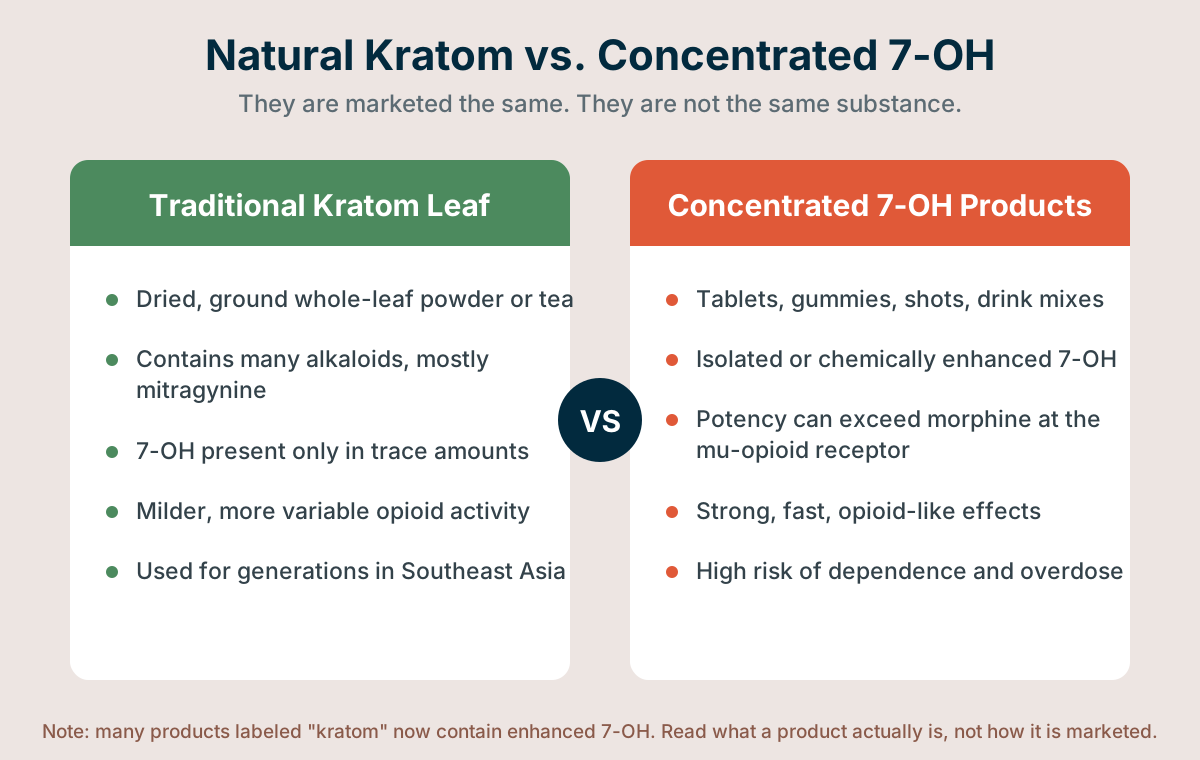
7-OH is short for 7-hydroxymitragynine, one of the active alkaloids in the kratom plant (Mitragyna speciosa), a tree native to Southeast Asia. In a natural kratom leaf, 7-OH exists in very small amounts. The compound getting attention today is different: it is isolated or chemically enhanced so that a single dose delivers far more 7-OH than any leaf ever could.
These 7oh kratom products are sold under many names and formats. You will see 7oh kratom tablets, capsules, gummies, powders, liquid shots, and "drink mixes" on shelves in smoke shops, vape stores, gas stations, and online. Some are labeled as kratom extract 7oh or a "kratom 7oh extract," while others are branded as feel-good or wellness products. The marketing usually leans on words like natural, herbal, and plant-based. That framing is misleading, because a concentrated 7-OH extract behaves nothing like a cup of traditional kratom tea.
Why "kratom" on the label does not tell the whole story
Because 7-OH occurs naturally in the plant, companies can call an enhanced product "kratom" even when its effects come from concentrated 7-hydroxymitragynine. Testing has found that some retail products marketed as kratom now contain 7-OH as their primary active ingredient. For a shopper, this means two products on the same shelf can carry the same "kratom" label while having dramatically different potency and risk. The safest habit is to read what a product actually contains, not how it is branded.
Kratom 7-OH effects: what it does to the body and brain
The reason 7oh kratom effects feel so strong is chemistry. 7-hydroxymitragynine binds tightly to the mu-opioid receptors in the brain, the same receptors that opioids like morphine act on. Published reviews estimate that 7-OH binds those receptors many times more strongly than mitragynine, kratom's main alkaloid, and some laboratory data suggest it is more potent than morphine at that receptor.
In the short term, people describe kratom 7oh effects that include:
- Pain relief and a warm, sedating sense of relaxation
- Euphoria or a mood lift, especially at higher doses
- A short-lived boost some users chase again and again
The problem is what follows. Because the effect is opioid-like, the body adapts fast. Tolerance builds, the pleasant effects fade, and many people find themselves using not to feel good but to avoid feeling sick. At high doses, or when 7-OH is mixed with alcohol, benzodiazepines, sleep medications, gabapentin, pregabalin, or other opioids, it can slow breathing to a dangerous degree. Health agencies and poison centers have linked concentrated 7-OH products to severe illness, emergency room visits, and fatal overdoses. Federal officials have gone so far as to describe the trend as the potential start of a new opioid epidemic.
Is 7-OH kratom addictive?
Yes. This is the question at the heart of the issue, so it is worth answering plainly. Is Kratom 7OH addictive? For concentrated 7-OH products, the honest answer is that it is addictive in the same way opioids are addictive. In its 2026 review supporting federal scheduling, the government cited preclinical data showing 7-OH has an abuse potential comparable to Schedule I and II opioids such as heroin, morphine, and fentanyl.
Kratom 7OH addiction can take hold faster than people expect. Because the compound is so potent at the opioid receptor, some regular users notice tolerance and early withdrawal within a couple of weeks. Once physical dependence sets in, stopping produces real withdrawal symptoms, which pulls people back into using. That cycle, wanting to quit but feeling unable to, is the hallmark of addiction, and it is not a matter of willpower or character.
Signs of 7-OH kratom addiction
You do not need to hit rock bottom to deserve help. If several of the following ring true, it may be time to talk to someone:
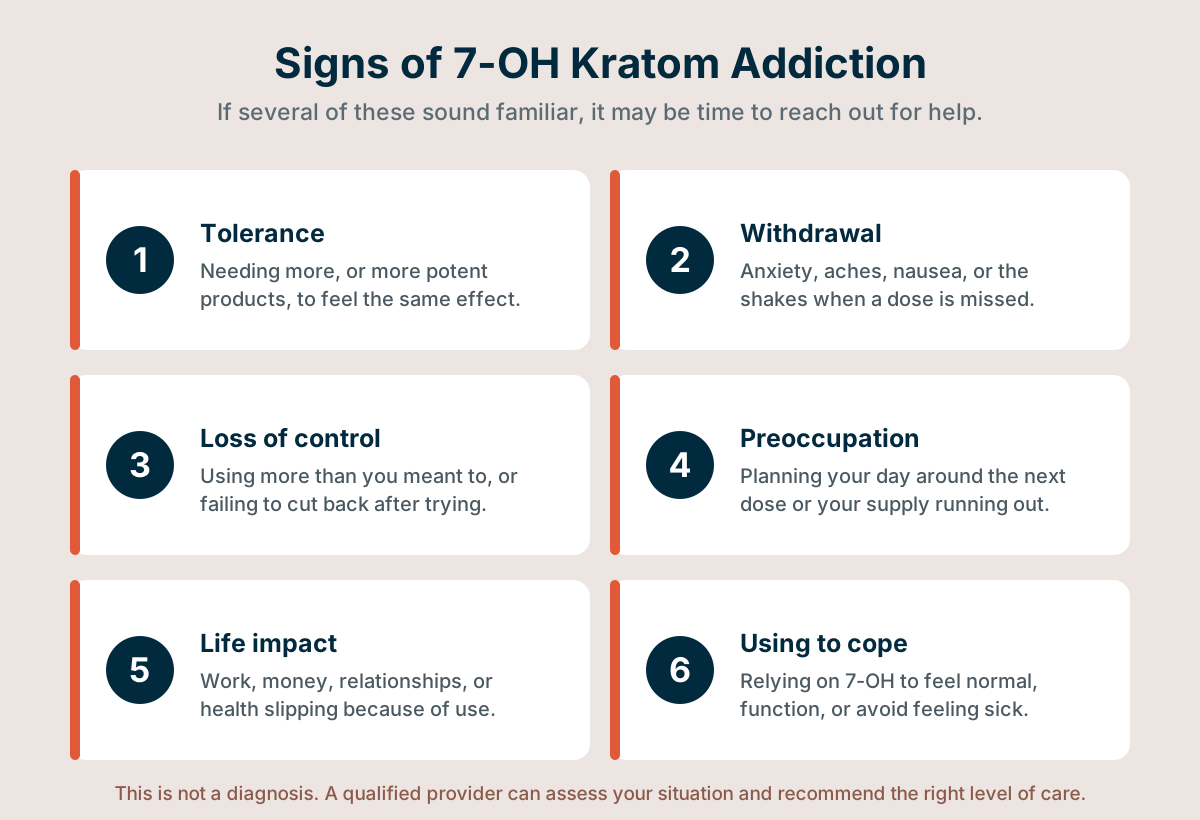
- You need more, or more potent, 7-OH products to get the same effect
- You feel anxious, achy, or sick when you skip or run low
- You use more than you intended, or you have tried to cut back and could not
- You plan your day around dosing or around not running out
- Work, money, relationships, or health are slipping because of use
- You rely on 7-OH just to feel normal or to function
The 7-OH kratom withdrawal timeline
Understanding the kratom 7oh withdrawal timeline can make the process far less frightening. Because 7-OH is short-acting and potent, withdrawal often starts sooner than with traditional kratom or many prescription opioids. The pattern below is a general guide. Your own experience will depend on how much you used, how potent it was, and how long you used it.
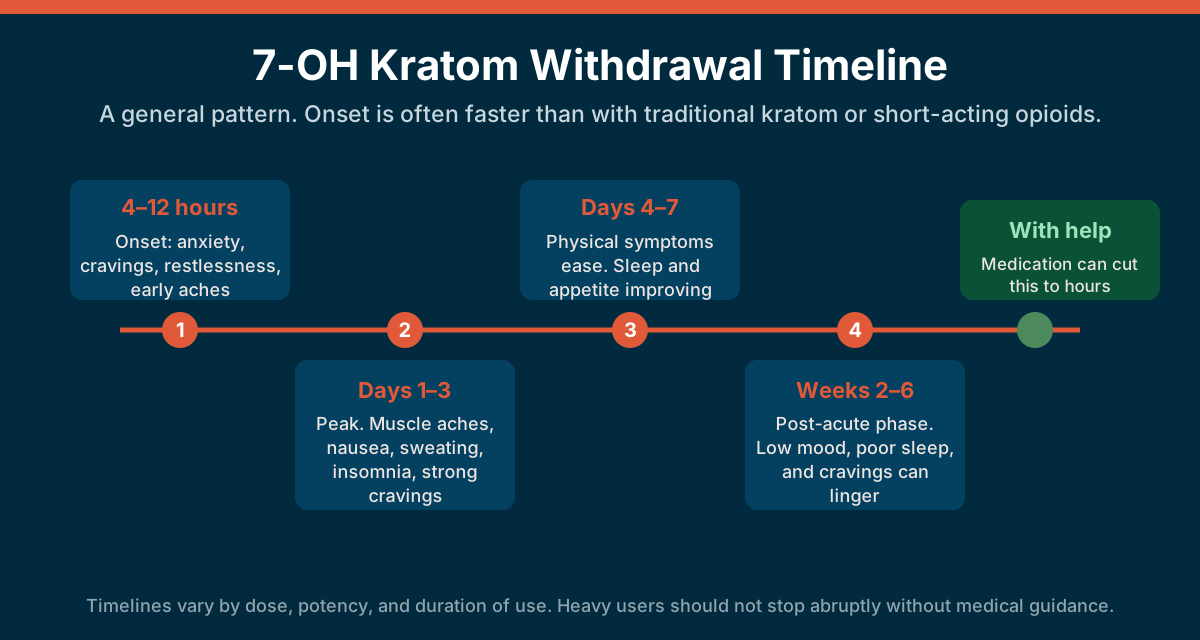
- 4 to 12 hours after the last dose: Onset. Anxiety, restlessness, cravings, and early muscle aches.
- Days 1 to 3: The peak. Muscle and joint pain, nausea, stomach upset, sweating, chills, insomnia, and strong cravings.
- Days 4 to 7: Physical symptoms ease. Sleep and appetite start to return.
- Weeks 2 to 6: A post-acute phase. Low mood, poor sleep, low energy, and cravings can linger and come in waves.
Does 7-OH show up as kratom on a drug test?
This is one of the most common questions people ask, so here is a clear answer. Does 7oh show up as kratom on a drug test? On a standard test, no. Routine 5-panel, 10-panel, and DOT workplace screens do not look for kratom's alkaloids at all, and 7-OH will not trigger a standard "opioid" or "opiate" result because it is a chemically distinct molecule from morphine, codeine, and similar drugs.
That said, detection is possible. Specialized laboratory panels can be ordered specifically to test for 7-OH and mitragynine, usually confirmed with mass-spectrometry methods. When those tests are used, 7-OH is typically detectable in urine for roughly one to seven days after the last use, depending on dose, frequency, and metabolism, and potentially longer in hair. One more caution: because some products marketed as kratom have been found adulterated with actual opioids, a contaminated product could in theory cause a positive opioid result. If a drug test is a concern for you, the far more important issue is usually the dependence itself, and that is very treatable.
Struggling with 7-OH? We treat this.
Many programs do not yet recognize 7-OH dependence. [FACILITY NAME] does. Our team treats 7-OH and opioid use disorder with medical detox, medication-assisted treatment, and real clinical support, all in a confidential setting. You can take the first step today.
Finding treatment for 7-OH kratom addiction
Finding treatment for Kratom 7OH starts with one idea: 7-OH dependence is an opioid problem, and it responds to opioid-focused treatment. The good news is that this is a well-understood area of medicine. You do not have to white-knuckle your way through it alone.
Effective care for 7-OH addiction usually combines several elements:
Medical detox
A supervised detox keeps you safe and far more comfortable during the hardest early days. Providers can use comfort medications to ease nausea, aches, anxiety, and sleep problems, and they can monitor for complications, especially if other substances are involved.
Medication-assisted treatment (MAT)
Because 7-OH acts on opioid receptors, medications used for opioid use disorder can be very effective. Buprenorphine (the active ingredient in Suboxone) is the most commonly used option, and for many people it can turn a multi-day withdrawal into a matter of hours while sharply reducing cravings. Timing matters, though. Starting buprenorphine too early can trigger precipitated withdrawal, so it should always be guided by a clinician. Not everyone needs long-term medication, and a good program tailors the plan to you rather than forcing a one-size-fits-all path.
Therapy and relapse prevention
Withdrawal is the beginning, not the finish line. Counseling, whether individual, group, or both, helps you understand what drove the use, build coping skills, and protect your recovery when cravings return during the post-acute phase. Support groups and structured aftercare make lasting recovery far more likely.
What to look for in a program
- Experience treating opioid use disorder, and specific familiarity with 7-OH
- Access to medical detox and medication-assisted treatment
- Individualized plans rather than a fixed protocol for everyone
- A confidential, judgment-free approach and help verifying insurance
Is 7-OH legal? A fast-moving regulatory picture
The rules around 7-OH are changing quickly, so treat any single date as a snapshot. In July 2025, the U.S. Food and Drug Administration issued warning letters to companies selling concentrated 7-OH products and recommended that the Drug Enforcement Administration schedule the compound. Later in 2025, federal agencies seized roughly a million dollars in 7-OH products. In July 2026, the DEA moved to temporarily place concentrated 7-OH (above a set threshold) into Schedule I, the most restrictive category. Several states had already banned it under their own kratom laws.
What does this mean for you? Legal status varies by state and is still shifting at the federal level. But the health risk does not wait for a law to catch up. Whether or not 7-OH is scheduled where you live, dependence is dependence, and effective treatment is available now.
Frequently asked questions about 7-OH kratom
Is 7-OH kratom addictive?
Yes. Concentrated 7-OH is a strong opioid-receptor agonist, and regular use can lead to tolerance, dependence, cravings, and withdrawal, sometimes within a few weeks. Federal reviews compare its abuse potential to that of powerful opioids.
Is 7-OH the same as regular kratom?
No. Natural kratom leaf contains only trace 7-OH and is mostly mitragynine. Concentrated 7-OH products isolate or enhance this one alkaloid, so 7oh kratom tablets, gummies, and shots can be far more potent and more addictive than plain leaf.
What are the effects of 7-OH kratom?
Short-term kratom 7oh effects include pain relief, sedation, and euphoria, followed by tolerance and dependence with repeated use. At high doses or mixed with other sedatives, it can cause dangerous respiratory depression.
How long does 7-OH withdrawal last?
The acute kratom 7oh withdrawal timeline usually runs three to seven days, with symptoms starting 4 to 12 hours after the last dose. A post-acute phase of low mood and cravings can last two to six weeks. Medication can shorten the acute phase considerably.
Does 7-OH show up as kratom on a drug test?
Not on standard panels. Routine and DOT tests do not screen for kratom alkaloids, and 7-OH does not read as a standard opioid. Specialized lab tests can detect it, typically for one to seven days in urine, but they must be ordered specifically.
How do I find treatment for 7-OH kratom addiction?
Choose a program that treats opioid use disorder and understands 7-OH. Look for medical detox, medication-assisted treatment, and therapy. You can also call the free, confidential SAMHSA national helpline at 1-800-662-4357 (HELP), available 24/7.
You do not have to figure this out alone
If 7-OH has taken more than you meant to give it, reaching out is a strong first move, not a last resort. Talk with our admissions team, confidentially and with no pressure, about what recovery could look like for you.
Sources
- U.S. Food and Drug Administration, "FDA Issues Warning Letters to Firms Marketing Products Containing 7-Hydroxymitragynine" and "Hiding in Plain Sight: 7-OH Products."
- U.S. Drug Enforcement Administration / Federal Register, "Temporary Placement of 7-Hydroxymitragynine Above a Specified Threshold in Schedule I" (2026).
- U.S. Department of Health and Human Services, press statement on DEA action against enhanced 7-OH products (2026).
- Labcorp, "Kratom and 7-Hydroxymitragynine (7-OH): Common Provider Questions."
- Peer-reviewed case reports and reviews on kratom and 7-OH withdrawal management with buprenorphine (Journal of Addiction Medicine and related literature).
- International Society of Substance Use Professionals, educational series on 7-OH withdrawal and treatment.