What to Say to Someone Who Refuses Help (Scripts)
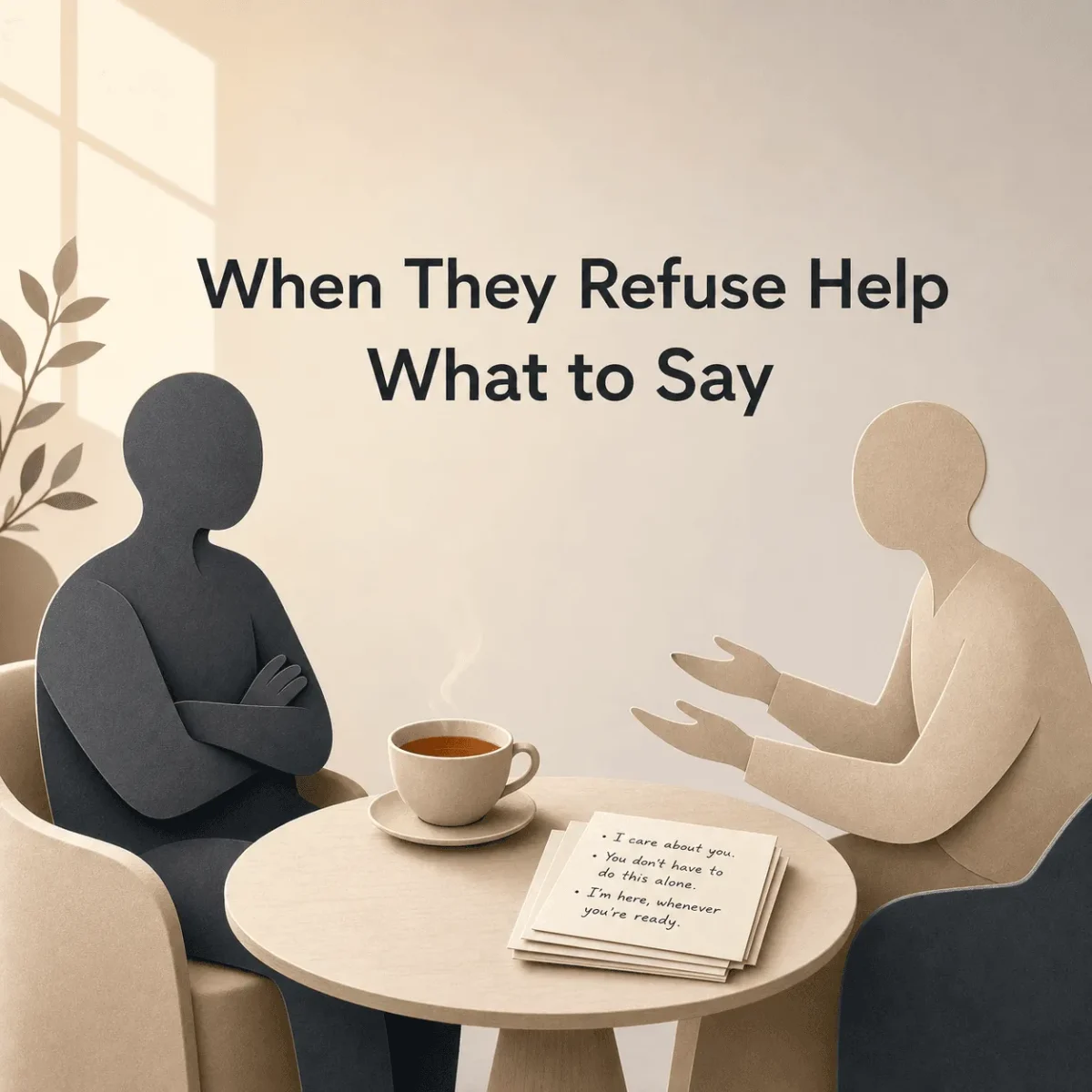
You can love someone like crazy and still hit this wall.
They are clearly struggling. With drinking. Pills. Gambling. Depression that keeps them in bed until 3pm. Panic attacks. Rage. Whatever it is.
And you bring it up, gently. Or not so gently. And they hit you with:
“I’m fine.”
“I don’t need help.”
“Stop trying to control me.”
“I said no.”
Then you’re standing there holding a bunch of fear and frustration, trying not to say the wrong thing and make it worse.
So this is a practical guide. Not perfect. Not magic. But real scripts you can actually use when someone refuses help. Plus what not to say, and what to do if things start getting dangerous.
Before you say anything, get clear on what “help” even means
A lot of refusals are about the word “help” itself.
Because “help” can sound like:
- You think I’m broken.
- You’re about to take my choices away.
- You’re going to make me admit something out loud.
- You want me to go to rehab tomorrow and tell my boss I’m a mess.
So it often works better to offer the smallest next step, not the whole mountain.
Not “You need rehab.”
More like:
“Would you be willing to talk to someone for 15 minutes just to see what they say?”
“Can we look at options, no commitment?”
“Can we do a doctor appointment and ask about sleep and anxiety, and that’s it?”
You’re not tricking them. You’re lowering the threat level.
In such situations, it's crucial to understand how you can be an ally to someone in recovery. This involves being supportive without being intrusive, respecting their autonomy while also expressing your concern for their well-being.
The core approach (in plain English)
When someone refuses help, you usually need three things in your tone:
- Respect: you’re not trying to win a debate.
- Clarity: you’re not pretending everything is fine.
- Boundaries: you’re not going down with the ship.
The scripts below follow a simple structure:
- Name what you’re seeing.
- Name how it affects you.
- Offer a next step.
- Accept their autonomy.
- Repeat your boundary.
That’s it. Over and over, calmly, like a broken record. (Because it kind of is.)
Scripts you can use right now
1) When they say “I’m fine. Leave me alone.”
Script: “Okay. I hear you. I’m not trying to pile on. I just want you to know I’m scared because I’m seeing things that don’t look fine to me. I’m here if you want support. If you don’t, I’ll give you space, but I’m not going to pretend I’m not worried.”
If they push back:
“Got it. I’m going to stop talking about it for today. But I’m not dropping it forever, because I care about you.”
2) When they deny there’s a problem at all
Script: “I’m not asking you to label yourself or admit anything. I’m telling you what I’ve noticed: you’ve missed work twice this month, you’ve been drinking most nights, and last weekend you scared me when you drove. To me, that’s a problem. I’d like us to talk to someone about options.”
If they say you’re exaggerating:
“Maybe I am. I hope I am. But I’d rather be annoying than quiet and regret it.”
3) When they say “You’re trying to control me.”
Script: “I get why it feels that way. I’m not trying to control you. I’m trying to be honest about what I can and can’t live with. You get to choose what you do. And I get to choose what I’m around.”
That last line matters. It’s not a threat. It’s reality.
4) When they’re embarrassed and defensive (but you can tell they’re cracking)
Script: “I’m not judging you. I’m not mad at you for struggling. I think something is hurting you and you’ve been trying to survive it. If you’re willing, we can look at help that actually fits you. No big speech. Just a next step.”
Then stop talking. Let silence do some work.
5) When they say “Therapy doesn’t work” or “Rehab is a scam”
Script: “Some places are bad, yeah. And some therapists aren’t a match. But that doesn’t mean nothing works. It means we have to find the right fit. Would you be open to talking to an admissions person just to hear what options exist?”
You can also try:
“Let’s not commit to ‘forever.’ Just one conversation.”
6) When they agree to “help” but refuse treatment
Sometimes they’ll say: “I’ll handle it myself.”
Script: “I respect that you want to handle it. I’m asking for something measurable so I’m not just hoping. What does ‘handle it’ look like this week? What changes should I expect to see?”
If they say “I don’t know”:
“Then it’s not a plan yet. Let’s build one with someone who does this for a living.”
7) When they lash out, insult you, or flip it back on you
Script: “I’m not going to argue or trade insults. I’m bringing this up because I care. If you want to talk respectfully, I’m here. If not, I’m going to step away and we can try again later.”
Then actually step away. Don’t stay and get shredded.
8) When you need to set a boundary without making it a dramatic ultimatum
Script: “I love you. And I’m not willing to keep doing this version of life. If you choose not to get help, that’s your choice. But here’s what I’m going to do: I’m not giving you money, I’m not covering for you, and I’m not riding in the car if you’ve been drinking. I’ll support recovery. I won’t support the illness.”
That line, “I’ll support recovery. I won’t support the illness,” is blunt. But it’s clean.
9) When it’s a partner and you’re exhausted
Script: “I miss you. I miss us. I feel like I’m living with the problem instead of living with you. I don’t need perfection. I do need effort and help. If you’re not willing to take a step toward getting support, I need to think about what I’m going to do to protect myself.”
Not a threat. A warning light.
10) When it’s your adult child and they keep refusing
Script: “You’re an adult, so I can’t make you choose treatment. But I can be honest. I see you getting worse. And I’m not going to finance that. If you want help, I’ll do everything I can to support it. If you don’t, I’m going to step back in specific ways.”
Then list specifics. Rent. Phone bill. Childcare. Whatever applies.
11) When it’s a friend who keeps “joking” about how bad it is
Script: “I know we laugh about it sometimes, but I’m actually worried. I don’t think you’re okay. Can I ask a serious question. Would you be willing to talk to someone if I helped you set it up?”
12) When they’re in that scary in-between zone, and you need to name consequences
This is the part people avoid. But sometimes it’s necessary.
Script: “I don’t want to scare you. I also don’t want to lie. If this keeps going, I think you could lose your job, your relationship, your health, maybe your life. I don’t want that story for you. I want a different next chapter. I’ll go with you to get help if you’ll let me.”

What not to say (even though you want to)
These usually backfire:
- “If you loved me, you’d stop.”
- “You’re selfish.”
- “You always ruin everything.”
- “You’re an addict.” (labels can trigger shame spirals)
- “This is your last chance.” (unless you mean it and can enforce it)
- “Why can’t you just…” (because if they could, they would)
Shame feels like a weapon. And people don’t move toward help when they feel cornered.
A simple “repeatable” script you can memorize
If you want one thing to keep in your pocket, use this:
“I love you. I’m worried. I’m seeing (specific examples). I want you to get support. I can’t force you. But I can’t pretend it’s fine, and I’m going to set boundaries to protect myself.”
It’s not poetic. It works.
If they refuse help because they’re terrified, not stubborn
Sometimes the refusal is fear wearing armor.
Fear of detox. Fear of withdrawal. Fear they’ll lose their kids. Fear of being judged. Fear of being told they can’t drink ever again.
Try this:
Script: “Can I ask what feels scary about getting help? Like the real reason, not the surface one. I won’t argue with you. I just want to understand.”
Then reflect it back.
“So you’re scared you’ll lose your job.”
“So you’re scared detox will be painful.”
“So you’re scared everyone will find out.”
And then:
“Okay. That makes sense. Let’s look at options that protect that as much as possible.”
That’s how you lower resistance. You make it safer.
When to stop talking and start getting outside help
If any of these are happening, this is bigger than scripts:
- They’re using substances and driving.
- There’s violence, threats, or intimidation.
- They’re mixing substances in a dangerous way.
- They’ve expressed suicidal thoughts or you suspect they might.
- They’re medically unstable (seizures, hallucinations, severe withdrawal symptoms).
If you believe they are an immediate danger to themselves or others, call emergency services in your area.
If it’s not an immediate emergency but it’s clearly escalating, talk to professionals who deal with this all day.
BriteLife Recovery has admissions support and treatment programs for addiction and co-occurring mental health issues, and they can walk you through options like detox, residential care, and therapy. If you’re stuck and not sure what level of care even makes sense, start here: https://britelife.com
Sometimes the “help” is not for them at first. It’s for you. A plan. A boundary. A next step.

If they keep refusing, here’s what you do next (practically)
- Document patterns for yourself. Not to “win.” To stay sane. Dates. Incidents. Broken promises.
- Stop rescuing. Covering, lying, paying, smoothing it over. That can accidentally glue them to the problem.
- Pick 2 or 3 firm boundaries. Not 15. Ones you can enforce.
- Get support for you. A therapist, Al Anon, trusted family, a counselor. You need backup.
- Revisit the conversation when they’re sober or calm. Not mid fight. Not at 1am.
- Offer the smallest next step again. A call. An assessment. An appointment. A tour.
People change when pain meets readiness. You can’t create readiness out of thin air. But you can stop cushioning the pain.
That part is hard. And weirdly loving.
One last set of scripts, for closing the conversation
Because you need a clean ending, not a spiral.
If they say no, again: “Okay. I’m not going to keep pushing today. My door is open when you’re ready.”
If they mock you: “I’m not going to argue. I love you. I’m stepping away now.”
If they promise, vaguely: “I hope so. What’s the next step and when is it happening?”
If they start bargaining: “Let’s pick something real and doable. One call. One appointment. One step.”
Wrap up
When someone refuses help, your job isn’t to deliver the perfect speech that suddenly unlocks them.
It’s to stay grounded. Speak clearly. Keep your dignity. Protect yourself. Offer real options. And repeat.
If you’re staring at this situation and thinking, I cannot do this alone, you’re probably right. You don’t have to.
If you want to explore treatment options or just get a professional perspective on what to do next, BriteLife Recovery is a place to start: https://britelife.com
FAQs (Frequently Asked Questions)
What should I do when a loved one says 'I'm fine' but clearly isn't?
When someone says 'I'm fine' but you notice they're struggling, acknowledge their words calmly: "Okay. I hear you. I'm not trying to pile on. I just want you to know I'm scared because I'm seeing things that don't look fine to me." Let them know you're there for support without pushing too hard, and set boundaries by saying you'll give them space but won't stop caring.
How can I approach someone who denies having a problem despite clear signs?
Avoid asking them to label themselves. Instead, gently point out specific observations like missed work or risky behaviors: "You've missed work twice this month and have been drinking most nights; last weekend you scared me when you drove." Offer to explore options together without pressure, emphasizing concern rather than judgment.
What if my loved one accuses me of trying to control them?
Acknowledge their feelings and clarify your intentions: "I get why it feels that way. I'm not trying to control you; I'm being honest about what I can and can't live with. You get to choose what you do, and I get to choose what I'm around." This respects their autonomy while setting healthy boundaries.
How do I handle embarrassment or defensiveness from someone who's struggling but showing cracks?
Reassure them that you're not judging or angry: "I think something is hurting you, and you've been trying to survive it." Offer help tailored to their needs without pressure: "If you're willing, we can look at help that actually fits you. No big speech. Just a next step." Then allow silence to give them space to process.
What if they say therapy doesn't work or rehab is a scam?
Validate their concerns by acknowledging that some options aren't perfect: "Some places are bad, yeah. And some therapists aren't a match." Emphasize finding the right fit and suggest minimal commitment steps like talking to an admissions person or having just one conversation to explore possibilities.
How do I respond when they agree to 'handle it themselves' but refuse treatment?
Respect their wish but ask for measurable plans: "What does 'handle it' look like this week? What changes should I expect?" If they can't specify, suggest building a plan with professional help: "Then it's not a plan yet. Let's build one with someone who does this for a living." This ensures accountability without forcing treatment.