Benzos + Alcohol: Why This Combo Turns Deadly Fast
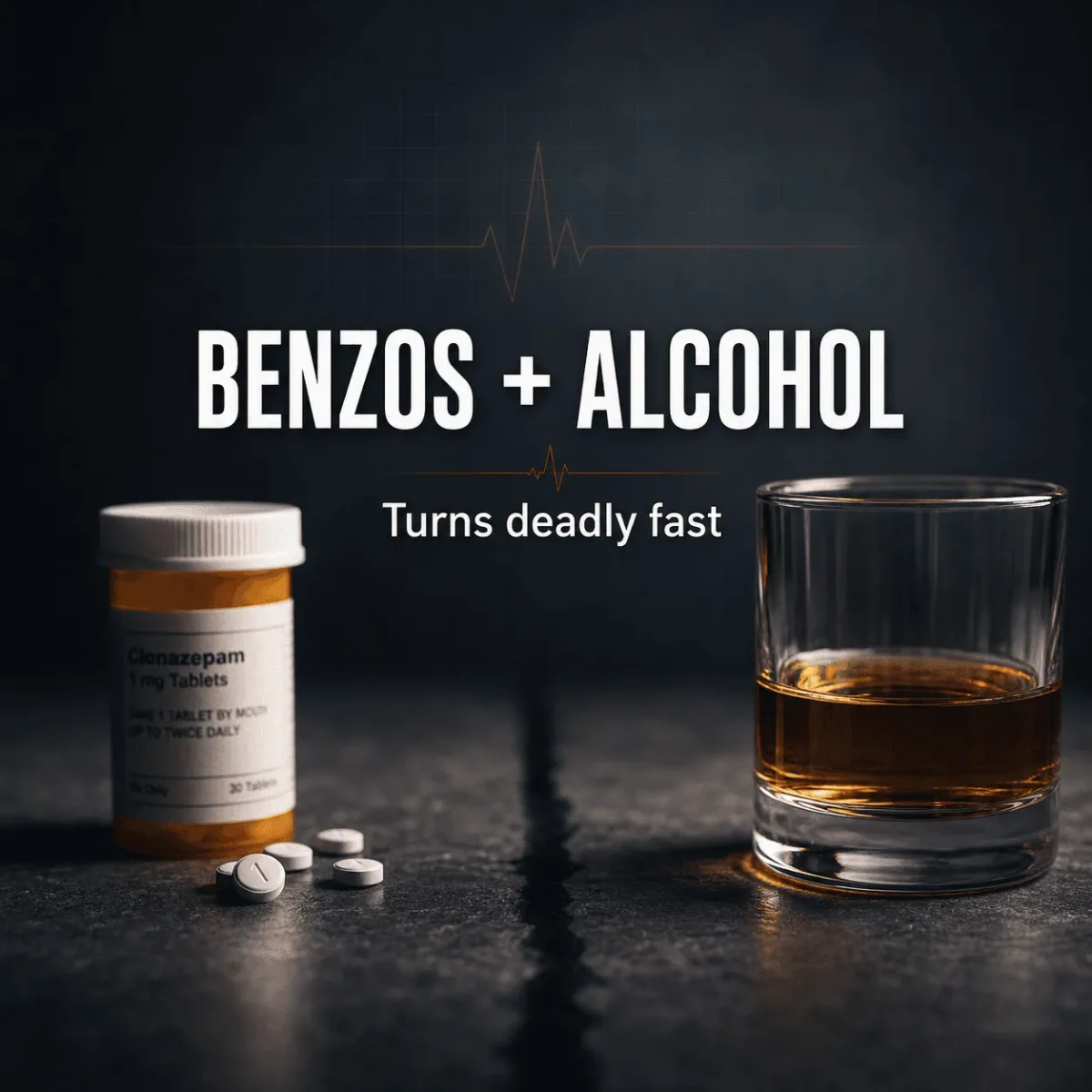
If you have ever heard someone say, “It’s fine, it’s just a couple drinks” while they are on Xanax, Ativan, Klonopin, Valium, whatever. Yeah. That’s the moment.
Because benzos and alcohol don’t just “stack” like two separate things in your body. They multiply. They blur your judgment, slow your breathing, knock out your memory, and in the wrong dose, or even a normal dose in the wrong body, they can shut the lights off fast.
And the scariest part is how ordinary it can look from the outside. A person can be talking, laughing, texting. Then they’re not.
The quick answer (that people still ignore)
Benzodiazepines (benzos) and alcohol are both central nervous system depressants.
That means they slow down the same core functions that keep you alive.
- Breathing rate
- Heart rate and blood pressure regulation
- Gag reflex and airway protection
- Wakefulness, alertness, coordination
So when you combine them, you’re not just “more relaxed.” You are potentially sedated to the point where your brain forgets to breathe, or you vomit and can’t protect your airway, or you pass out in a position where your airway closes.
It can become fatal. Quietly. Quickly.
What benzos actually do in the brain
Benzos are typically prescribed for anxiety, panic, insomnia, muscle spasms, and sometimes seizures. Common ones include:
- Alprazolam (Xanax)
- Lorazepam (Ativan)
- Clonazepam (Klonopin)
- Diazepam (Valium)
- Temazepam (Restoril)
They work by enhancing the effect of a neurotransmitter called GABA. Think of GABA like the brain’s brake pedal. More GABA activity means slowed brain signaling.
That’s why benzos can feel like relief. The inner noise drops. The body unclenches. Sleep can finally happen.
But the same “brake pedal” effect is exactly why they become risky, and why mixing is such a problem.
What alcohol does (and why it’s not “different enough”)
Alcohol also increases GABA activity. It also affects glutamate (another neurotransmitter) and a bunch of other systems, but the key point is this:
Alcohol presses the brake pedal too.
So now your body has two substances pushing the same direction. Hard.
And unlike a lot of other drug combinations, this one isn’t forgiving. People don’t get a clean warning signal like, “Hey, stop, you’re about to overdose.” Often the person feels fine… right up until they don’t.

The “deadly fast” part: how the combo turns on you
Let’s get specific, because this is where it matters.
1) Respiratory depression
This is the big one. Your breathing slows. It becomes shallow. Your oxygen drops.
Sometimes the person looks like they’re just sleeping.
Sometimes they snore, which people brush off. But snoring can mean partial airway obstruction. And when you’re heavily sedated, you don’t wake up to fix it.
2) Aspiration (choking on vomit)
Alcohol irritates the stomach. Benzos blunt the gag reflex. Put those together and someone can vomit while unconscious and inhale it.
That’s a medical emergency. It can be fatal, or cause severe lung injury even if they survive.
3) Blackouts and “automatic” behavior
A benzo blackout is not the same as being drunk. People can walk, talk, drive, eat, text, argue, have sex, and not remember any of it.
Add alcohol and the blackout risk shoots up. That’s how people accidentally take more. They forget they already took it. Or they feel less inhibited and take another pill. Or someone offers them one and they say yes without thinking.
It's crucial to understand that alcohol is addictive, often requiring professional help for recovery such as inpatient alcohol rehab. Moreover, navigating through an alcohol use disorder can be overwhelming without proper guidance. This addiction can sometimes intertwine with other substance abuses leading to a complex situation like in alcohol vs drug addiction scenarios.
4) Falls, head injuries, and accidents
Both substances wreck balance and reaction time. Combined, it’s common to see falls, fractures, car crashes, drownings. Even “simple” things like taking a shower can become dangerous.
5) Slower emergency response
This part is brutal. The combo can make the person less likely to call for help, and the people around them might misread what’s happening.
“Oh, they’re just drunk.”
“He always sleeps like that.”
“She’s fine, let her sleep it off.”
That’s how minutes turn into hours.
“But it was prescribed” doesn’t make it safe with alcohol
A lot of dangerous mixes happen with prescribed benzos. Not street benzos. Not counterfeit pills. A legitimate prescription.
People assume that means the medication is safe, period.
The safer truth is more like: it can be safe when used exactly as directed, in the right patient, with medical oversight, and without contraindicated substances.
Alcohol is one of the big contraindicated substances.
Even if you take a low dose benzo, alcohol can amplify it. Even if you drink lightly, benzos can amplify it. Even if you “have a tolerance,” all it takes is one night when your body is tired, dehydrated, you haven’t eaten, you took a little more than usual, you took it earlier than usual, your metabolism is off, you’re mixing with other meds like opioids or sleep aids.
That is how people end up in the ER. In such cases, seeking professional help from a drug and alcohol rehab center can provide the necessary support and treatment.
What symptoms look like when it’s becoming an emergency
If someone has mixed benzos and alcohol, watch for:
- Trouble staying awake, nodding off mid sentence
- Slurred speech, extreme confusion
- Uncoordinated movement, can’t stand or sit upright
- Slow or irregular breathing
- Blue or gray lips or fingertips
- Vomiting while drowsy or unconscious
- Unresponsiveness, can’t be woken up
If you can’t wake them, or their breathing is slow or weird, treat it as an emergency.
Call emergency services immediately. And stay with them.
If you’re in the U.S., call 911.
What to do right now if you think someone is in danger
Not medical advice, just basic safety steps that matter:
- Call 911 if they’re unresponsive, breathing slowly, or you’re unsure.
- Do not let them “sleep it off.”
- If they’re unconscious, place them on their side (recovery position) to reduce choking risk.
- Do not give them coffee, a cold shower, or try to make them walk it off.
- Stay with them and monitor breathing until help arrives.
Also important. If you know what they took, tell responders. If you have the pill bottle or know the name, share it. It helps.
Why this mix is especially risky for some people
There are a few situations where benzos plus alcohol is even more dangerous, even at “normal” amounts.
Older adults
Metabolism slows. Medications stay in the system longer. Balance is worse. Breathing issues are more common.
Sleep apnea or breathing problems
If someone already has compromised breathing during sleep, sedatives plus alcohol can push them over the edge.
Small body size, dehydration, or not eating
Alcohol hits harder on an empty stomach. Sedation increases. Blood sugar issues can get mixed in too.
Mental health conditions, especially depression
This combo can worsen depressive symptoms and impulsivity. Also, it increases risk of self harm in some people, because inhibition drops while sedation rises.
Mixing with other depressants
Opioids, sleep meds (like Ambien), barbiturates, some muscle relaxers, certain antihistamines. This is where overdose risk skyrockets.
The weird thing about tolerance (it doesn’t protect you like you think)
People who take benzos regularly can build tolerance to some effects. Same with alcohol.
But tolerance is uneven. You might feel less “high” or less sedated, yet your breathing can still be suppressed. Or your coordination can still be impaired. Or the dose that felt normal last week hits differently today.
Also, benzo withdrawal is dangerous. Some people keep using just to avoid withdrawal symptoms, and alcohol becomes a way to “boost” the effect when the benzo feels weaker. That pattern can get out of control fast.
“I only do it sometimes.” Yeah, that’s often how it starts.
A lot of people don’t plan to mix. It happens in these kinds of everyday moments:
- They take a benzo for anxiety before a social event, then drink because it’s a social event.
- They drink, feel anxious, then take a benzo to calm down.
- They can’t sleep after drinking, so they take a benzo or a sleep med.
- They take their prescription like usual and forget alcohol “counts” as a drug.
No big dramatic story. Just a normal night.
And that’s why it’s worth talking about plainly.
If you’re mixing benzos and alcohol, it’s usually a sign you need more support
Not because you’re a bad person. Not because you’re “an addict” in the way people picture it. But because if your nervous system needs chemical brakes from two directions just to get through the day, or through the night, something is off. And it tends to get worse, not better, without help.
A safer plan often starts with an honest conversation:
- Are benzos still medically appropriate?
- Is there dependence or withdrawal happening?
- Is alcohol being used for anxiety, sleep, trauma symptoms, or emotional shutdown?
- Are there co-occurring mental health issues that need treatment, not just sedation?
That’s the kind of work a good treatment team can actually help with. If you find yourself in this situation, seeking professional help such as residential drug and alcohol rehab could be beneficial. There are many options available depending on your location. For instance, if you're in Pennsylvania, you might consider drug and alcohol rehab in Hanover. Alternatively, if you're situated in New York, drug and alcohol rehab in West Kill could be an option worth exploring.
Treatment and detox: why medical supervision matters with benzos
This is important. Do not abruptly stop benzodiazepines on your own if you’ve been taking them regularly.
Benzo withdrawal can be severe and, in some cases, life threatening. Symptoms can include intense anxiety, panic, tremors, insomnia, hallucinations, and seizures.
Alcohol withdrawal can also be dangerous.
So if someone is using both, especially regularly, it’s not a DIY situation. A medically supervised detox can mean the difference between a controlled taper and a medical crisis.
If you or someone you love is stuck in this cycle, BriteLife Recovery offers addiction and co-occurring mental health treatment, including medically supervised detox, residential care, and step-down options like intensive outpatient services depending on the location and clinical needs. You can learn more at https://britelife.com or reach out to their admissions team to talk through what’s going on and what would actually be safest.
A real life style checklist (quick and honest)
If any of these are true, take it seriously:
- You drink even though you’re prescribed benzos.
- You take benzos even though you’ve been drinking.
- You “save” pills for nights you plan to drink.
- You have memory gaps after mixing.
- You’ve had a fall, a scary sleep episode, or someone couldn’t wake you.
- You’ve tried to stop one or both and felt awful, so you kept going.
This is the point where getting help stops being “extra” and starts being basic self preservation.
Final thought
Benzos plus alcohol is one of those combinations that doesn’t care about your intentions. It doesn’t care if you’re stressed, if you had a hard week, if your prescription is legitimate, if you “usually handle it.”
It can turn deadly fast because it shuts down the systems you need to stay alive. Breathing, reflexes, awareness. Gone.
If this is part of your life right now, even occasionally, you don’t have to wait for a disaster to make a change. Start with a conversation. If you need a place to start, BriteLife Recovery is one option, and you can find more information or contact their team at https://britelife.com.
FAQs (Frequently Asked Questions)
Why is mixing benzodiazepines and alcohol so dangerous?
Both benzodiazepines (benzos) and alcohol are central nervous system depressants that slow vital functions like breathing, heart rate, and alertness. When combined, their effects multiply rather than just add up, leading to severe sedation, respiratory depression, impaired gag reflex, memory blackouts, and potentially fatal outcomes like overdose or choking.
What are some common benzodiazepines that should not be mixed with alcohol?
Common benzodiazepines include Alprazolam (Xanax), Lorazepam (Ativan), Clonazepam (Klonopin), Diazepam (Valium), and Temazepam (Restoril). These medications enhance GABA activity in the brain and can cause dangerous interactions when taken with alcohol.
How does combining benzos and alcohol affect breathing?
The combination leads to respiratory depression where breathing becomes slow and shallow. This can reduce oxygen levels dangerously. People may appear to be just sleeping or snoring, but this can indicate partial airway obstruction without the person waking up to correct it, which is life-threatening.
What risks are associated with blackouts when mixing benzos and alcohol?
Benzodiazepine blackouts involve memory loss despite outwardly normal behavior like talking or texting. Alcohol increases blackout risk further, causing people to forget doses taken, accidentally overdose by taking more pills, or engage in risky behaviors without awareness.
Can prescribed benzodiazepines be safely used with alcohol?
No. Even if benzodiazepines are prescribed by a doctor, combining them with alcohol is unsafe. The interaction still poses serious risks including respiratory failure, accidents, and death. It’s crucial to avoid drinking alcohol while on these medications.
What should you do if someone appears overly sedated after mixing benzos and alcohol?
Do not assume they are simply sleeping it off. Monitor their breathing closely for signs of slow or shallow breaths or choking sounds like snoring indicating airway blockage. Call emergency services immediately if they are unresponsive or have difficulty breathing to prevent fatal outcomes.