
Voices of Hope: How Clients Helped Write We Do Recover
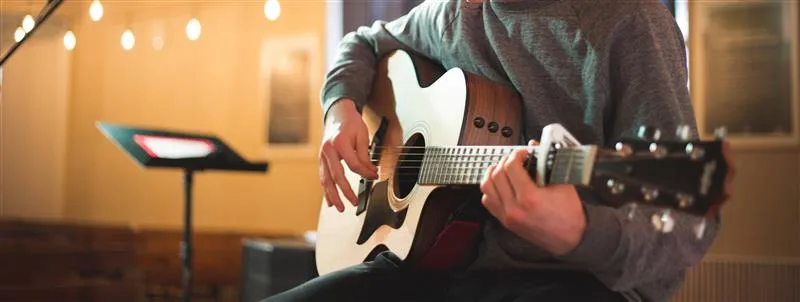
A recovery coach and songwriter worked with clients in treatment to transform their words into a full album and lyric book—an invitation to connection, courage, and hope.
The room was quiet except for the scratch of pens on paper.
At a treatment center in the Northeast, a group of men and women sat in a circle, heads down, writing. The exercise was simple: write whatever comes to mind for three minutes. Don't stop. Don't edit. Just keep the pen moving.
When the timer went off, the facilitator—a grey-bearded songwriter with a guitar leaning against his chair—asked if anyone wanted to share what the experience was like. An elderly man spoke up, a tear forming in his eye.
"I wrote about guilt," he said. "The guilt I have for abandoning my family and especially my grandchildren."
The facilitator asked if there was anything positive he could take from the experience. The man paused, then said: "I'll use the guilt as a motivation to do whatever it takes to bring my family back into my life. I have a dream of my granddaughter playing with this old man's white beard."
That moment—raw, honest, and full of longing—is the kind of thing that happens when John Dillon walks into a treatment center with his guitar and a stack of blank paper. It is also the kind of moment that becomes a song.
An Album Born in Treatment
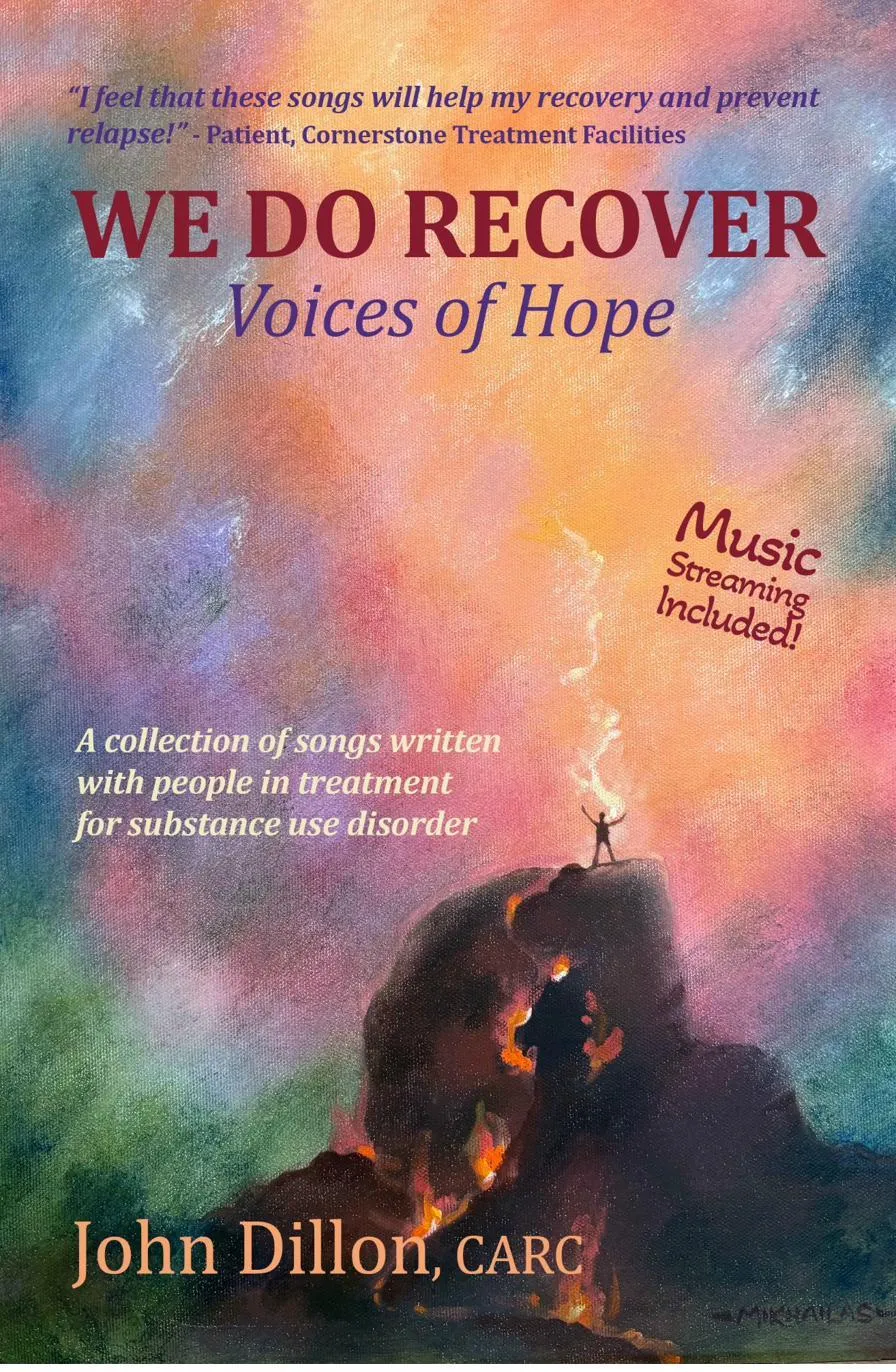
We Do Recover: Voices of Hope is both an album and a lyric book—a collection of songs written in collaboration with people in treatment and early recovery from substance use disorder. The words come from them. The music comes from John Dillon, a performing songwriter, recovery coach, and person in long-term recovery himself. The result is something you can listen to while you read—a companion experience designed to meet people wherever they are on the journey.
Several of the album's tracks were co-written with clients at BriteLife Recovery, the treatment provider with locations in Pennsylvania, New York, and South Carolina. Those songs include "Surrender," "We Do Recover," "Handcuffs & the Flame," "A Brighter Life," "Reach for the Light," and "Coming Home." A final track, "Spirit Bird," was co-written with Dr. Jennifer Richards, BriteLife's Chief Clinical Officer.
As John describes the project: "There's a raw wisdom in the words of people coming out of a very dark period of their lives and beginning to seek the light. This insight combined with the experience of a creative person in long-term recovery conveys a message of hope to readers and listeners."
Stream the album: johndillon.hearnow.com
Buy the lyric book + album: johndillon1.bandcamp.com
Meet John Dillon
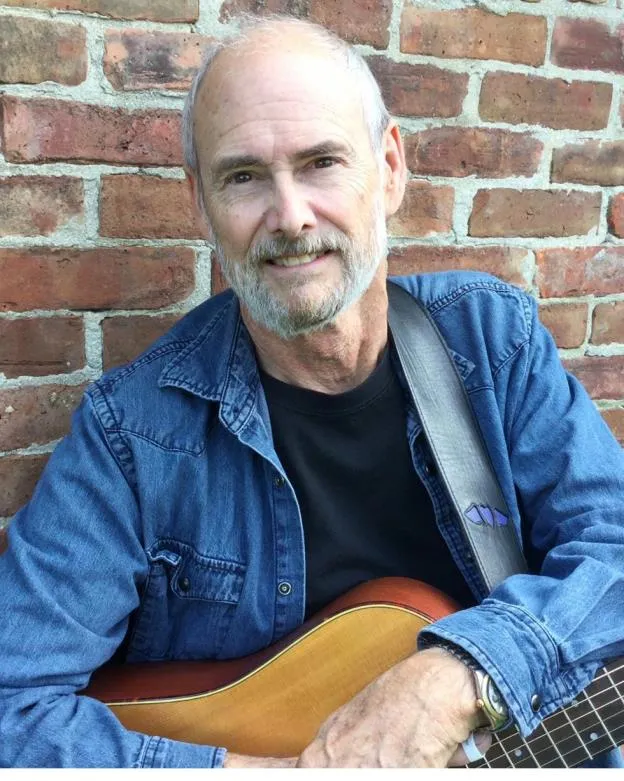
John Dillon is a performing songwriter, author, and producer in long-term recovery from substance use disorder. He is a New York Certified Addiction Recovery Coach. John is recognized for his 21-year career as producer and co-host of Art of the Song—a public radio program about songwriting and creativity that was heard nationwide on over 100 stations. His book The 20-20 Creativity Solution gives readers a step-by-step process to enhance their creativity.
In 2022, he released his fourth album Hope Road, which tells his story from 1960s traveling hippie to active addiction and on to recovery. His next album The Lighthouse Project is a collection of songs written with members of the Creative Recovery Group. His latest album We Do Recover – Voices of Hope consists mainly of songs written in collaboration with people in treatment for substance use disorder.
John performs concerts of recovery music and facilitates creative writing workshops at treatment and recovery centers throughout the Northeast. He lives on an upstate New York farm with his wife Vivian, his mother-in-law, two dogs, two horses, and (some would say) too many guitars.
How the Songs Are Made
The process behind these songs is part workshop, part alchemy. It begins when John visits a treatment center to perform a recovery concert and facilitate a collaborative writing session. He opens with free-writing exercises—three minutes of putting pen to paper without stopping—to loosen the group up and build trust. Then the group chooses a topic together: surrender, hope, coming home, letting go, finding light in the dark.
They write about it, individually and sometimes in small groups, and those who are willing share what they've put down.
Everything is voluntary. No one is required to share, and no identifying details are ever used. John collects the anonymous writings, takes them back to his studio, and begins the careful work of transcription. He reads through every word, looking for patterns, images, rhymes, and emotional throughlines—the common threads that connect one person's experience to another's.
From there, he shapes verses, choruses, and bridges. He writes the music, records the song, and returns to the center on a later visit to perform the finished piece for the group. The people who participated get to hear their own words—their own truth—reflected back to them as music. Using this collaborative method, John has written more than 75 songs to date.
Once the songs are written, the recording process begins. In his home studio, John creates a drum track that fits the groove of the song. Then he adds guitars, bass, and vocals. In some cases, he sends the song out to other musicians to add their instruments. John’s wife Vivian Nesbitt sings harmony on many of the songs.
How Privacy Is Protected
Participation in every workshop is completely voluntary. No identifying details are ever shared or used in the songwriting process. The focus stays on universal themes of recovery—not personal histories. The songs belong to the community, not to any one individual.
A Clinician's Perspective
Dr. Jennifer Richards, PsyD, is BriteLife Recovery's Chief Clinical Officer. A clinical psychologist with experience spanning every level of substance use disorder treatment—from hospital-based detox to outpatient care—Dr. Richards has spent her career leading clinical teams and developing innovative programming.
Her involvement in this project goes beyond endorsement. She co-wrote the album's closing track, "Spirit Bird," with John—a song that explores the possibility of spiritual awakening as people grow in their recovery. For Dr. Richards, the intersection of creativity and clinical work isn't incidental. It's essential. Creative expression in treatment offers people a way to make meaning out of suffering, to tell the truth in a language that feels safe, and to connect with others who understand.
"In recovery work, people are often asked to talk about experiences that feel impossible to put into words. Creative expression opens a different doorway. Through music and storytelling, people can speak truth in ways that feel safer, more honest, and more human. I've watched individuals who struggle to articulate their pain suddenly find their voice through a lyric or a melody. In those moments, something shifts, not just emotionally, but relationally. They remember they are not alone."
Inside the Songs
The album traces a journey that many people in recovery will recognize: from the darkness of active addiction to the moment of asking for help, through the difficult middle ground of treatment, and finally toward a life rebuilt on new foundations. Here are three of its most powerful tracks.
"A Brighter Life"
Theme: Acceptance, patience, taking it one step at a time
This track has become something of an unofficial theme song for BriteLife Recovery, and it's not hard to hear why. Born from a workshop where clients were asked to write about what "a brighter life" might look like—not someday in the distant future, but starting now—the song captures the fragile optimism of early recovery. It speaks to the courage it takes to believe that things can actually get better, even when the evidence feels thin. For anyone sitting in a treatment center wondering whether the work is worth it, this song is a quiet, steady answer: yes.
Reflection prompt: What does a brighter life look like for you—not a year from now, but this week?
"We Do Recover"
Theme: Collective voice, community, shared strength
The title track is the beating heart of the project. Its chorus, assembled from the writings of an entire group, captures something that no single voice could say alone: we do this, not just I. Recovery can feel unbearably lonely, especially in its early days. This song is a reminder that no one walks the path alone. The chorus sums up what it means to recover—together—and when John performs it live at treatment centers, you can see it land in the room. People lean forward. Some mouth the words. Others just nod, because they know.
Reflection prompt: Who is part of your "we"? Who are the people walking this road with you?
"Spirit Bird"
Theme: Spiritual awakening, growth, transformation
The album's closing track was co-written by John and Dr. Jennifer Richards, BriteLife's Chief Clinical Officer. Together, they explore the possibility of a spiritual awakening—not in any dogmatic sense, but as an opening. A shift. The experience of discovering that there is something beyond the grip of addiction, something larger and more generous than the life you've been surviving. "Spirit Bird" lifts the album into its final register: the understanding that recovery is not just about stopping something, but about starting something new. John’s wife Vivian Nesbitt plays Native American Flute and sings harmony.
Reflection prompt: What has surprised you most about your own capacity for growth?
The Larger Arc
Taken together, the songs on We Do Recover: Voices of Hope trace a movement that mirrors the recovery process itself. It begins in darkness and survival. It moves through surrender and asking for help. The middle songs reflect the hard-won insight and new language that emerge in treatment—learning to name what hurts, learning to ask for what you need. And the final tracks carry the listener toward home: going back into the world, rebuilding relationships, staying connected.
This arc wasn't imposed on the material. It grew from it. John found it in the words people wrote—the same journey, told by hundreds of different hands. That's what makes this collection more than an album. It's a document of collective experience, shaped into something that can be shared, returned to, and carried forward.
How to Listen, How to Use
This album and lyric book were designed to be used, not just listened to. Here are a few ways to make them part of your recovery practice or your work with others:
Listen while reading. Stream the album and follow along in the lyric book. Let the words and music work together.
Journal with the reflection prompts. Each spotlight in this article includes a question you can sit with. Write for three minutes, the same way the workshop participants did.
Bring one line or theme to group. Pick a song that speaks to you and share it with your therapy group, recovery meeting, or support circle as a conversation starter.
Share with a support person or family member. Sometimes it's easier to hand someone a song than to explain what you're going through. These tracks can open a conversation that words alone might not.
Stream the album: johndillon.hearnow.com
Buy the lyric book + album: johndillon1.bandcamp.com
Back to That Room
That man in the writing workshop—the one who wrote about guilt and granddaughters and white beards—didn't know he was writing a song. He was just telling the truth with a pen in his hand. That's all any of the participants in John's workshops are doing. And that's why the music works: because it's real.
When asked what he hopes happens after people read and listen, John doesn't reach for anything grand. "I hope these songs and stories will inspire people who are in recovery to continue to stay sober a day at a time," he says. "I hope those in active addiction will understand that there is a path to recovery, and it's okay to ask for help. And I hope those who have a friend or family member suffering from substance use disorder will have a better understanding of the disease and the process of recovery."
That's the invitation. Listen. Read. Let someone else's words remind you that you're not alone. And if you're ready, pick up a pen yourself.
We Do Recover: Voices of Hope
By John Dillon, CARC
Written with clients at BriteLife Recovery and other recovery organizations.
Stream: johndillon.hearnow.com
Buy: johndillon1.bandcamp.com
Learn more: HopeRoadMusic.com
